

Aromatic and medicinal plants are valuable resources for essential oils, herbal products, cosmetics, and other bio-based ingredients. Yet processing them efficiently remains a challenge, especially when fresh plant material has to be transported over long distances before it can be transformed into high-value products. Transport, energy use, water consumption, and labour availability are key issues for producers working with these materials.
As part of its work on flexible, electrified industrial heating technologies, FLEXHYON is investigating how biomass processing can become more efficient and closer to the source of raw materials.
To explore the needs of the sector, the project spoke with Pedro Pablo Pellín from EL JARPIL, a FLEXHYON partner with long-standing expertise in aromatic and medicinal plants. EL JARPIL has been producing and commercialising essential oils and herbal products since 2004.
Drawing on this practical experience, Pedro shared insights into the challenges producers face today and explained why more flexible, energy-efficient and mobile processing solutions could make a real difference.
Fresh plants create a race against time
For producers of aromatic and medicinal plants, the route from harvest to final product needs to be fast, efficient, and carefully managed.
When plants are destined for essential oils, extracts, or herbal products, the harvested material often has to travel from agricultural or forestry areas to a processing facility. Depending on where the plants grow, these distances can be considerable.
Pedro highlights transport as one of the first challenges producers face after harvesting.
“The transport of plant material is one of the main challenges, as it can deteriorate between the harvesting point and the processing point.”
The problem can become even more significant when harvesting is mechanised. Mechanical harvesting can damage the plant material, increasing the need for careful handling and timely processing.
The situation is particularly challenging when wild plants are collected. Producers cannot choose where these resources grow, and harvesting locations may be remote or difficult to access.
This raises a question that is central to FLEXHYON’s biomass work: could more processing take place closer to the harvest site, instead of moving large quantities of fresh plant material to a fixed facility?
Energy and water are major processing challenges
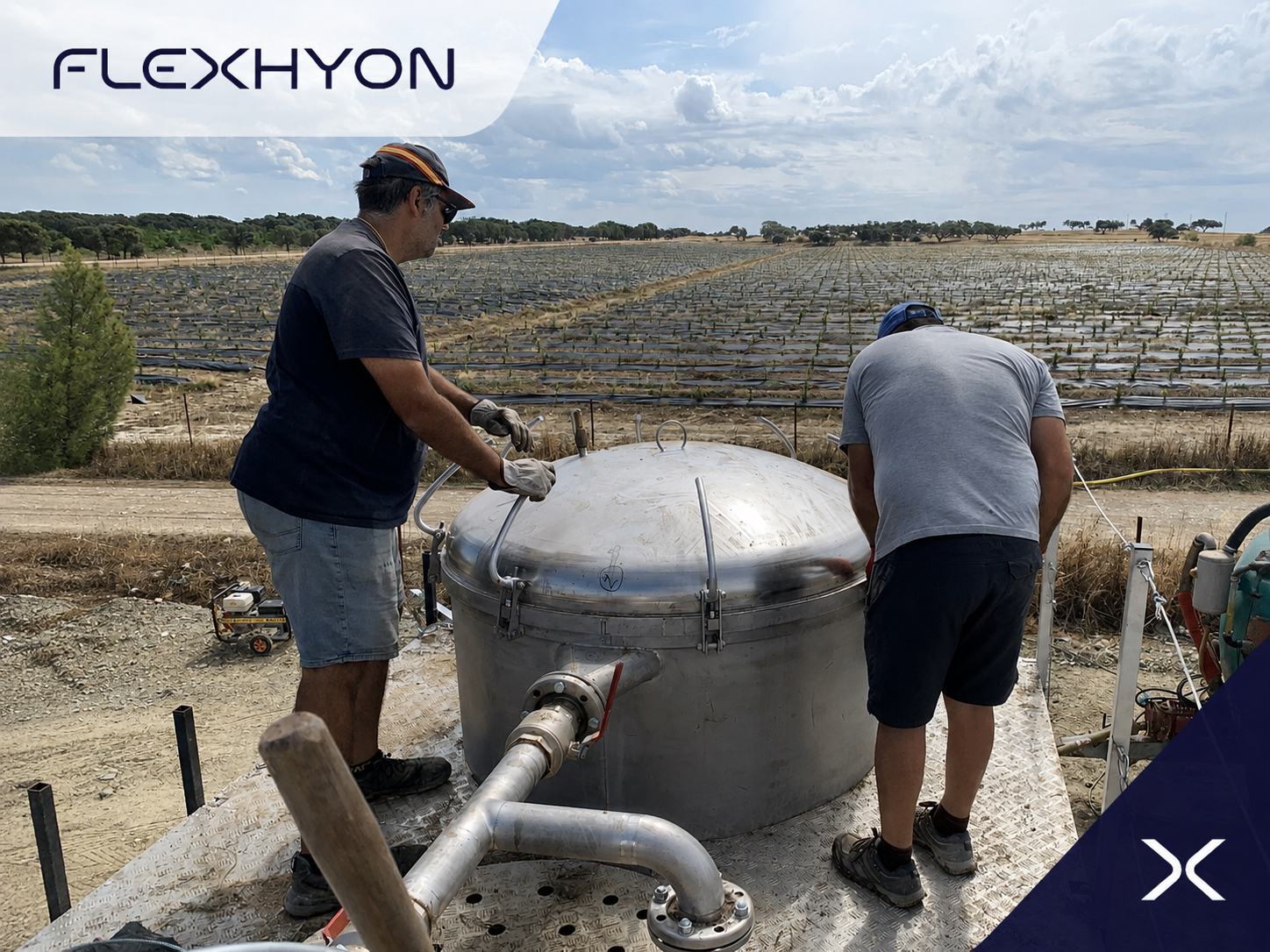
Beyond transport, processing aromatic and medicinal plants also involves significant energy and water requirements.
Fresh plants naturally contain substantial amounts of water. When they are transformed into essential oils, extracts, or dried herbal products, much of this water must be separated from the valuable plant material.
Processes such as drying, distillation, and extraction can therefore require significant amounts of energy. Conventional steam distillation also relies on water to generate steam and sustain the process.
For producers, these requirements affect both environmental performance and production costs.
Pedro explains that the energy required for processing can represent a significant share of the final production cost.
The sector is therefore facing two connected challenges: improving the efficiency of processing and reducing the amount of energy and water required.
Labour availability adds another layer of complexity. Many companies working with aromatic plants operate in rural areas, where finding suitable workers can be difficult. According to Pedro, greater mechanisation and more efficient processing systems are becoming increasingly important for the sector.
Bringing processing closer to the harvest
Mobile processing is not a new concept for EL JARPIL.
In an earlier research project, BEONNAT, the company worked with CEDER-CIEMAT, also FLEXHYON’s partner, on a trailer-based mobile steam distillation system.
The equipment showed how processing technology can be brought closer to plant resources, rather than requiring all harvested biomass to be transported to a permanent industrial facility.
For Pedro, this kind of mobility is especially valuable when working with wild plants.
“Having mobile equipment with adequate capacity is a competitive advantage.”
A mobile processing system could reduce the distance between harvesting and processing, while giving producers greater flexibility across different agricultural and forestry locations.
This could be especially relevant when access to raw material is difficult or when freshly harvested plants need to be processed quickly.
Building on this experience, FLEXHYON is now exploring how electrified technologies could support a new generation of portable processing systems.
FLEXHYON’s approach to portable biomass processing
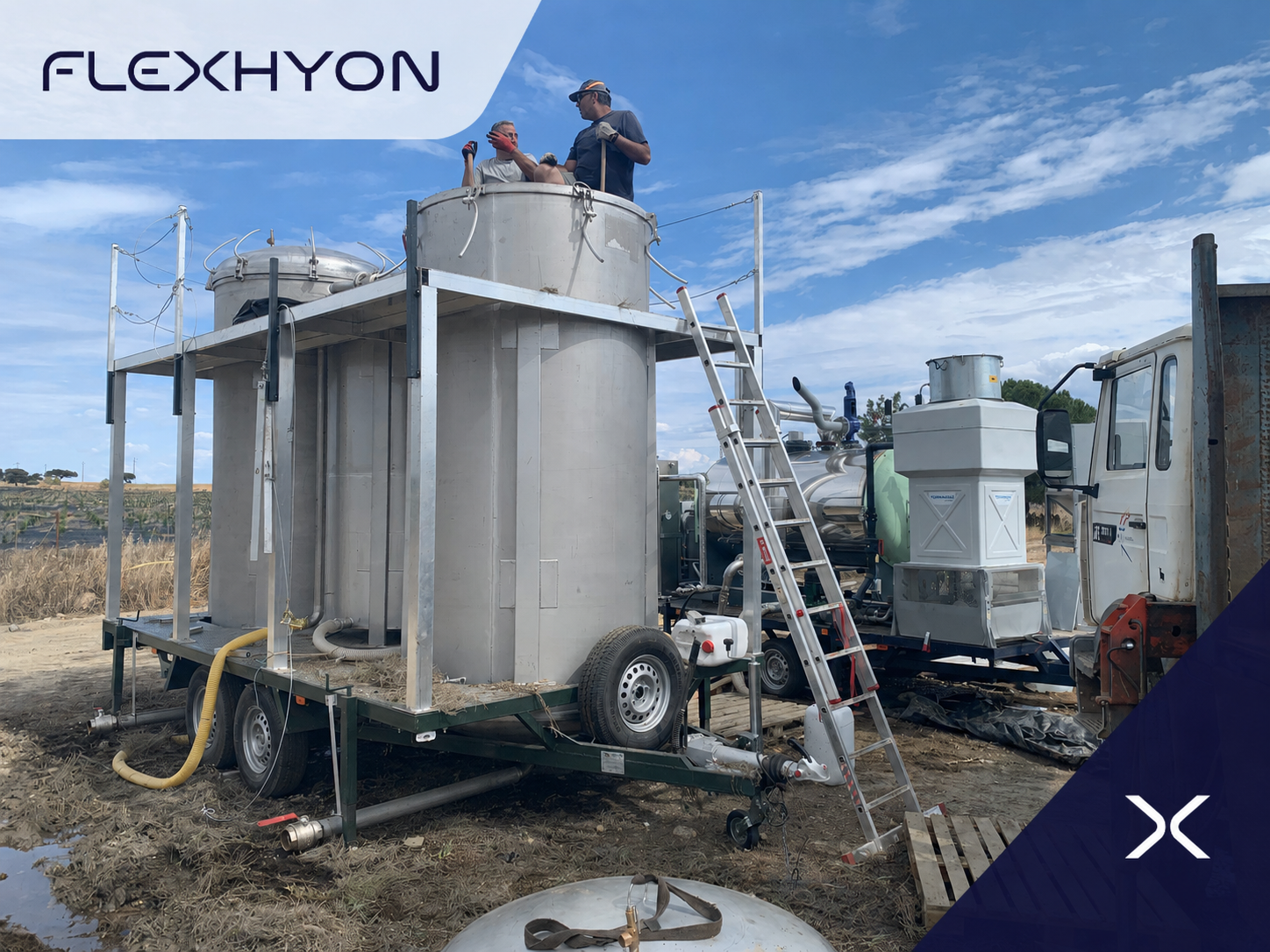
FLEXHYON is developing alternative, fully electrified heating systems for three industrial applications: ceramics, feed production, and biomass processing.
For the biomass case, the project is working on a portable system combining microwave-assisted distillation and ultrasound-assisted extraction.
In simple terms, the project will investigate microwave technology as part of the distillation process, while ultrasound will support the extraction of valuable compounds from plant material.
The aim is to assess whether these technologies can make biomass processing more flexible and efficient, while reducing reliance on conventional thermal processes.
Portability is central to this concept. The future FLEXHYON biomass system is intended to support processing closer to agricultural and forestry resources, including freshly harvested aromatic plants.
The next step will be to demonstrate whether this approach can deliver benefits under realistic operating conditions.
FLEXHYON is currently developing and testing its new eco-heating systems. The biomass solution will later move towards integration, demonstration, and on-site validation.
The project will assess factors such as energy efficiency, environmental performance, operating costs, flexibility, and product quality. Project documentation specifically foresees a portable biomass prototype and its validation through on-site tests.
This step is essential because industrial innovation is not only about proving that a technology works. It must also show that the system can process sufficient volumes, operate reliably, and compete with existing methods.
What this could mean for producers
For aromatic plant growers, essential oil producers, and other companies working with plant-based raw materials, a successful mobile system could create new opportunities.
Processing raw materials closer to their source could support more decentralised production and reduce some of the logistical challenges associated with transporting fresh plants.
Electrification could also create opportunities to combine industrial processing with electricity from renewable sources.
From EL JARPIL’s perspective, the potential benefits go beyond energy savings. Faster and more flexible processing could help producers manage plant material more efficiently and make better use of resources available in rural areas.
For Pedro, this transition reflects a broader move towards cleaner, more flexible, and more resource-efficient processing in the sector.
“If we can achieve the same results at low temperatures and using electrical energy obtained from renewable sources, the benefits will be not only industrial, but also societal.”
There is still important work ahead. Any new processing system must demonstrate that it is efficient, scalable, reliable, and economically competitive.
Industrial partners such as EL JARPIL play an important role in this process. Their practical experience helps FLEXHYON connect technology development with real production needs, ensuring that future solutions are assessed not only in the laboratory, but also under the conditions where they may eventually be used.
Stay updated on FLEXHYON
Follow the development of FLEXHYON’s new electrified heating technologies, the biomass demonstrator, and the experiences of our project partners.