
Ceramic tile drying removes moisture after pressing, preparing tiles for glazing, decoration and firing. It is an essential step in production: manufacturers need to control moisture while maintaining production speed and managing energy use. FLEXHYON is exploring how a hybrid electric drying system could help meet these needs with less reliance on natural gas.
To understand the industrial perspective, the project spoke with Miguel Angel Bengochea, Quality & Innovation Director at Victoria Ceramics Spain. He has worked at Keraben Grupo, now part of Victoria Ceramics Spain, since 1996, holding management roles across research, innovation and development, technical sales, exports and quality. Keraben Grupo is the FLEXHYON partner hosting the ceramic demonstration.
His perspective highlights why improving one stage of production could make a meaningful difference, provided that the new technology meets the demands of a working factory.
Why ceramic tiles need drying before firing
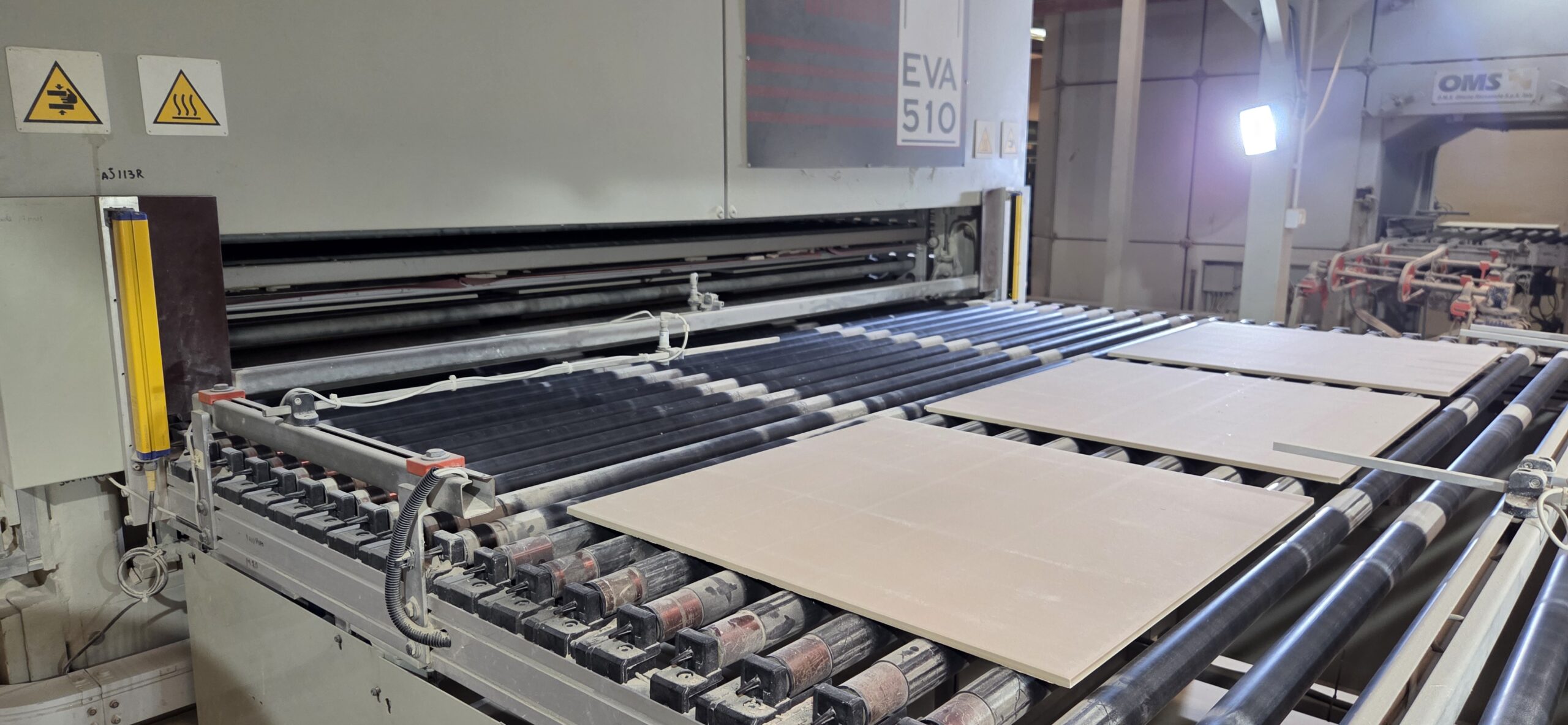
After pressing, ceramic tiles still contain moisture that must be reduced before they move through the next production stages. Bengochea explains that this matters particularly during firing, when tiles are exposed to rapidly increasing temperatures. If too much moisture remains inside the ceramic body, water can turn into vapour and escape too quickly, putting the product at risk.
Controlled drying helps prepare tiles for these conditions. By removing moisture before glazing and decoration, manufacturers can support the fast firing processes used in industrial production. Drying therefore has a direct connection to productivity: it needs to deliver tiles with suitable moisture levels at a pace that supports the rest of the manufacturing line.
How energy costs affect ceramic manufacturers
For Victoria Ceramics Spain, energy and sustainability are closely connected to competitiveness. Bengochea describes the ceramic sector’s strong dependence on natural gas as a major challenge. Changes in fuel prices and supply conditions can affect manufacturers’ operating costs, while the need to reduce carbon emissions adds pressure to improve production processes.
From his perspective, energy is a leading cost concern. Reducing consumption is therefore important both for environmental performance and for the company’s ability to remain competitive. A different energy source or a faster treatment is useful only if it can also meet production requirements.
Why Victoria Ceramics became involved in FLEXHYON
Bengochea links the company’s involvement in FLEXHYON to its commitment to technological innovation and environmental improvement. It sees an opportunity to investigate whether changing the drying stage could reduce energy consumption and operating costs while improving environmental performance.
As Bengochea explains:
“The opportunity is twofold: to reduce the energy consumption and costs, and to improve our environmental impact by changing only one step of the manufacturing process.”
The company’s contribution helps connect technology development with practical manufacturing needs. Its team is defining requirements for product quality, production speed, productivity, energy use and emissions. A factory needs a process that fits the products it manufactures and the speed at which it operates.
How FLEXHYON is exploring electric tile drying
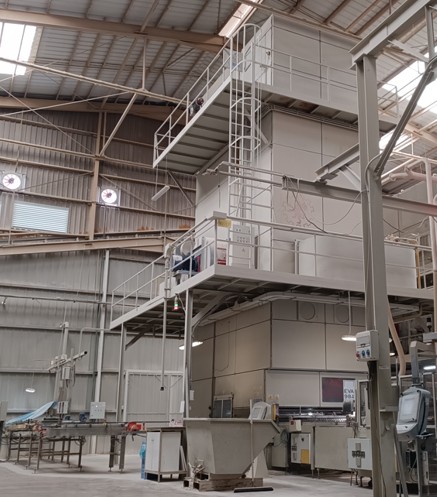
FLEXHYON is developing a hybrid electric system for drying ceramic tiles after pressing. The approach combines microwave energy with hot air supplied using a heat pump. The project design also includes high-frequency vibration, or ultrasound, as part of the proposed drying approach.
To explain the microwave principle, Bengochea draws a comparison with a familiar household appliance. Just as microwave energy can heat moisture in food, it can be used to heat moisture within a ceramic tile. In the planned industrial system, microwave heating and hot air work together to support moisture removal. The heat pump supplies energy for the hot-air part of the process.
The project is investigating whether this combination can reduce the energy required for drying and shorten processing time while meeting industrial requirements. The focus is specifically on drying after pressing. Subsequent stages, including glazing, decoration and firing, remain part of the tile manufacturing process.
From ceramic samples to industrial validation
In the interview, Bengochea discussed the ceramic samples and production information supplied to support laboratory studies and system design. According to him, information about material characteristics, moisture content and production requirements is essential for designing the equipment.
These activities support development. They do not yet establish the final system’s energy savings or performance under industrial conditions. Demonstration is planned at Keraben’s production site in Nules, Spain.
Energy savings must go hand in hand with product quality
For ceramic manufacturers, lower energy consumption cannot come at the expense of the finished product. Bengochea explains that tiles processed using the new system will be assessed against the technical and aesthetic standards already applied by the company.
He does not expect major changes in quality parameters if moisture levels after drying remain within the currently accepted ranges, noting that the drying step does not change the ceramic composition. This is an expectation that future testing will need to examine.
Production speed is another essential consideration. The system must remove moisture effectively while supporting sufficient output for the manufacturing line. Successful validation will therefore need to consider energy performance, moisture control, product quality and productivity together.
What successful electric drying could mean for manufacturers
For Victoria Ceramics Spain, a successful outcome would offer a new way to support its environmental commitments and reduce operating costs. Looking further ahead, Bengochea sees the potential for a fully industrial system that could be integrated into production lines when existing natural gas dryers are replaced.
That remains a future opportunity. The development pathway described in the interview and project plan includes further engineering, testing and industrial validation before conclusions can be drawn about the final system’s performance.
The central question is practical: can a new electric drying system use less energy while delivering the quality and production performance that manufacturers need? By bringing technology developers and industrial partners together, FLEXHYON is working towards answering that question under real manufacturing conditions.
Follow FLEXHYON’s Progress
Follow FLEXHYON’s latest news for updates on electric industrial heating, technology development and future demonstration activities.